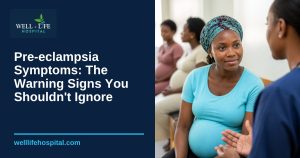
These could be pre-eclampsia symptoms, and they shouldn’t be ignored. Some of the warning signs of pre-eclampsia are easy to brush off, especially when you assume they’re just normal pregnancy discomforts. Dr. Yakub of Well-Life Hospital in Abuja explains why recognizing these signs and getting checked early can make such a difference. Here’s what to look out for, what happens at the clinic, and why going early matters.
Why can high blood pressure in pregnancy feel like nothing?
Because it’s often silent. With mild high blood pressure, many women feel completely normal, and the WHO notes that some women with pre-eclampsia have no symptoms at all. Dr. Yakub puts it plainly: by the time symptoms appear, the condition may already be getting serious.
So the blood pressure cuff at each antenatal visit tells you far more than how you feel on the day. A good day doesn’t necessarily mean your blood pressure readings are normal.
You can read more about pre-eclampsia from the WHO.
What are the warning signs of pre-eclampsia?
If you’re in the second half of pregnancy, and especially if you’ve already been told your blood pressure is high, watch for these pre-eclampsia symptoms:
- Blurred vision or seeing spots, even if you’ve had eye problems before.
- A severe headache that doesn’t go away or respond to the usual measures.
- Sudden pain high in your chest or upper tummy, especially pain you’ve never had before.
- Swelling in your face or hands that comes on quickly.
- Sudden loss of sight. It’s not common, but Dr. Yakub has seen women suddenly lose their vision from severe high blood pressure in pregnancy.
If you notice any of these warning signs, seek urgent medical assessment. Don’t wait for your next antenatal appointment. If you experience a seizure, sudden loss of vision, severe breathing difficulty or other severe symptoms, seek emergency care immediately.
If a pregnant woman has a fit
A fit or convulsion in pregnancy may be a sign of eclampsia, and it’s a medical emergency for both mother and baby. Take her to the nearest hospital immediately. Do not try to restrain her or put anything in her mouth. Keep her safe from nearby objects while help is arranged.
What happens at the antenatal clinic?
Your first visit records your baseline blood pressure. That’s why Dr. Yakub advises seeing a doctor as soon as you know you’re pregnant, not when you start showing. After that:
- Your blood pressure is checked at each visit.
- If it starts to rise, you’ll usually be asked for a urine test to look for protein.
- Your doctor may also request blood tests to assess your kidney and liver function and platelet levels.
- If there are concerns, you’ll be monitored more closely, sometimes with hospital admission.
That “high risk” label can feel frightening. It simply means your team is paying extra attention to you and your baby.
How is pre-eclampsia managed?
For women with existing high blood pressure or early signs, care may include medicine to keep blood pressure under control, along with other treatment your doctor may prescribe to reduce the risk of complications. Take it exactly as prescribed, and never stop it on your own.
When complications become dangerous, the safest option is often to deliver the baby, even if that means delivering early. It’s a very difficult decision, and doctors don’t make it lightly. Delivery removes the placenta, which plays a central role in pre-eclampsia. However, blood pressure and other complications may still need treatment and monitoring after birth.
“If you live long enough, you will have another baby, but I’m not sure the baby can make another mother.” (Dr. Yakub, Well-Life Hospital)
It sounds hard, but the point is simple. When a choice has to be made, protecting the mother’s life comes first.
For more information about the care and management of high blood pressure during pregnancy, see the NICE guidelines on hypertension in pregnancy.
Does it end once the baby is born?
Not always. Dr. Yakub explains that some women develop high blood pressure in the first six weeks after delivery. Pre-eclampsia can also develop for the first time after childbirth.
So keep your postnatal appointments, and tell your doctor about any severe headache, blurred vision, upper abdominal pain or breathing difficulty after birth too. Don’t assume these symptoms are simply part of recovering from delivery. Blood pressure can remain high or even worsen after birth, so follow-up checks are important.
Why does going early matter so much?
Because early care can help prevent the “bad” from becoming the “ugly”. A 2024 review of Nigerian studies reportedly found that around 6% of women with pre-eclampsia or eclampsia died. Dr. Yakub says that in this part of the world, some women only reach a hospital when it’s too late to help, often because they never had antenatal care.
There’s real hope in the other direction. When women come early and receive appropriate care, doctors have a better opportunity to identify problems, manage complications and protect both mother and baby.
You know your body. If something feels wrong in pregnancy, trust that feeling and get checked. Well-Life Hospital’s obstetrics and maternity team is open 24 hours at 12b Atbara Street, Wuse 2, Abuja. Contact us to book antenatal care or to be seen about any of these signs.
Frequently asked questions
What does a pre-eclampsia headache feel like?
Dr. Yakub describes it as a severe headache that doesn’t respond to the usual measures, often occurring in the second half of pregnancy. If you have a headache like that, especially with blurred vision, seek urgent medical assessment. Don’t wait until your next antenatal appointment.
When should I start antenatal care?
As soon as you know you’re pregnant. An early visit records your baseline blood pressure, so any rise later is easier to identify. Don’t wait until you’re showing or until something feels wrong.
Can pre-eclampsia happen after birth?
Yes. High blood pressure can appear in the first six weeks after delivery, even once the baby is home. Keep your postnatal appointments and report a severe headache or blurred vision straight away rather than waiting for your next check.
Can you have pre-eclampsia without symptoms?
Yes. Many women feel fine, and the WHO notes that some have no symptoms at all. That’s why blood pressure checks and urine tests at antenatal visits matter so much: they can pick up changes you can’t feel.
Where can I get antenatal care in Abuja?
Well-Life Hospital at 12b Atbara Street, Wuse 2, Abuja offers obstetrics and maternity care and is open 24 hours.