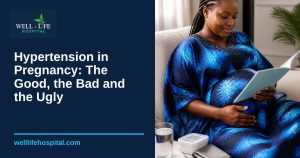
Most women expect a few things in pregnancy. Swollen feet, a sore back, cravings at odd hours. High blood pressure during pregnancy, also known as pregnancy-induced hypertension in some cases, is rarely on the list. Yet hypertension in pregnancy is one of the main reasons women still die from pregnancy-related causes, and many of the women it affects never had a blood pressure problem before.
Dr. Yakub of Well-Life Hospital in Abuja explains it with a simple picture: the good, the bad and the ugly. Some types are mild and easy to watch. Others can turn dangerous quickly. This guide explains each one, why pregnancy can push your blood pressure up, and what the numbers on your antenatal card actually mean.
What counts as high blood pressure?
Blood pressure is the force of your blood pushing against the walls of your blood vessels. When it’s measured, you get two numbers. For an adult, Dr. Yakub explains that a reading below 140/90 mmHg is generally considered normal during pregnancy. A reading of 140/90 mmHg or higher is considered high and needs medical assessment.
The World Health Organization uses the same threshold for hypertension in pregnancy. Pre-eclampsia is diagnosed when high blood pressure develops after 20 weeks alongside protein in the urine or other signs that organs are affected. So if your card says 145/95, your doctor will want to look more closely, even if you feel perfectly well.
You can learn more from the World Health Organization’s guide to pre-eclampsia.
Can pregnancy cause high blood pressure?
Yes. You can go your whole life with normal readings and still develop high blood pressure in pregnancy. Pregnancy changes almost everything in your body, and for some women those changes are linked to a rise in blood pressure, usually in the second half of pregnancy.
This is one reason pregnancy-induced hypertension can come as a surprise. A woman may have had normal blood pressure for years and only discover the problem during a routine antenatal appointment.
That’s why a clean history isn’t a reason to skip checks. Whether or not high blood pressure runs in your family, every pregnant woman needs her readings watched. Regular antenatal visits help your healthcare team notice changes and decide whether further checks are needed.
What are the types of high blood pressure during pregnancy?
Doctors group high blood pressure during pregnancy into four types, depending on when it starts and how it affects your body.
Chronic hypertension: already there
This is high blood pressure you had before pregnancy, or that shows up in the first 20 weeks. In this case, the pregnancy didn’t cause it. It still needs close care, because pregnancy adds extra strain.
Pregnancy-induced hypertension: the good
This type, also called gestational hypertension, starts after 20 weeks. In its simple form, your blood pressure rises without significant protein in your urine or other signs of organ complications. Dr. Yakub calls this the “good” type because it usually doesn’t cause major problems, as long as it’s watched.
However, pregnancy-induced hypertension still needs regular monitoring because it can sometimes progress to pre-eclampsia.
Pre-eclampsia: the bad
Here, high blood pressure after 20 weeks comes with signs that your body is being affected. The clearest sign may be protein leaking into your urine, which is why you may be asked for a urine sample when your readings start to climb.
However, protein in the urine is not the only sign doctors look for. Pre-eclampsia can also affect organs such as the kidneys, liver and brain, even when protein is not detected in the urine.
Pre-eclampsia is serious because it can snowball quickly and needs close medical attention.
Eclampsia: the ugly
This is when pre-eclampsia progresses to fits (convulsions). It’s an emergency for both mother and baby, and without the right help it can take a woman’s life very quickly. It’s one of the most severe complications of high blood pressure during pregnancy.
Why does high blood pressure during pregnancy matter so much?
Because it’s more common, and more dangerous, than most people realize. The WHO says pre-eclampsia affects 3% to 8% of women who give birth worldwide, and that high blood pressure disorders cause around 16% of maternal deaths globally. That was about 42,000 women in 2023.
Closer to home, a 2024 review of Nigerian studies found pre-eclampsia in about 4.5% of pregnant women and eclampsia in just under 1.4%. Dr. Yakub notes that in this part of the world, bleeding used to be the biggest killer of pregnant women. Today, high blood pressure takes many lives too, among rich and poor alike.
What can you do about it?
The single most useful thing is to know your numbers early. As soon as you find out you’re pregnant, visit a hospital or clinic so your baseline blood pressure is recorded. After that, regular antenatal checks let your care team spot a rise before it turns into something worse.
“Knowing your blood pressure early enough in pregnancy is one way of knowing how to prevent the complications.” (Dr. Yakub, Well-Life Hospital)
When a problem is picked up early, doctors can take steps to manage it and reduce the risk of serious complications. The danger grows when women arrive late, already very unwell, and there is far less time for doctors to respond.
High blood pressure during pregnancy isn’t something to panic about. It’s something to watch. Whether yours turns out to be the good, the bad or the ugly type, early care and regular monitoring give you and your baby a better chance.
To start antenatal care at Well-Life Hospital, contact our team or visit us at 12b Atbara Street, Wuse 2, Abuja. We’re open 24 hours, and Dr. Yakub’s full talk is on our YouTube channel.
Frequently asked questions
What blood pressure is too high during pregnancy?
A reading of 140/90 mmHg or above is considered high during pregnancy. If your blood pressure reaches that level, your doctor will assess you and may request a urine test or other investigations to check for pre-eclampsia. Ask what your reading means at every visit.
Can you get high blood pressure during pregnancy if you’ve never had it before?
Yes. Pregnancy itself can cause high blood pressure, usually after 20 weeks, even in women whose readings were always normal. That’s why every pregnant woman needs regular checks, not only those with a history of hypertension.
What is pregnancy-induced hypertension?
Pregnancy-induced hypertension, also called gestational hypertension, is high blood pressure that develops after 20 weeks of pregnancy without the signs of pre-eclampsia at the time of diagnosis. It needs regular monitoring because it can sometimes progress to pre-eclampsia.
What is the difference between pre-eclampsia and eclampsia?
Pre-eclampsia is high blood pressure that develops during pregnancy alongside signs that the mother’s organs may be affected. Protein in the urine is one possible sign. Eclampsia occurs when a woman with pre-eclampsia develops fits or convulsions. Eclampsia is a medical emergency, which is why pre-eclampsia needs close monitoring.
Is pregnancy-induced hypertension dangerous?
The mild form often causes no major problems when it’s monitored. But it needs regular checks because gestational hypertension can progress to pre-eclampsia. Keep every antenatal appointment and report any new or worrying symptoms promptly.